Masterclass at Metis Montessori Lyceum

At Noord see Lights, we believe people should be encouraged to be a little more creative again. In a world filled with mass production, everything is starting to look the same. Yet the things you make or design yourself are often the most special.

That is why our design tool gives people the opportunity to create their own lamp. Because how great is it when a lamp does not only provide light, but also reflects a little piece of your personality?

But our mission goes beyond our own designs.

Over the past few months, we have been working on something that we are incredibly excited about ourselves: an educational programme at the Metis Montessori Lyceum. There, 60 students worked in small groups to design their own sustainable lamps.

Designers of the future

Of course, designing a lamp does not immediately start with building one. First, the students explored the world of the circular economy. Because as a designer of the future, you also need to think about questions such as:

  • What materials do you use?
  • Which factors determine whether a product is sustainable?
  • What actually makes a product sustainable?
  • And which production techniques are suitable for a world in which we want to use resources more intelligently?

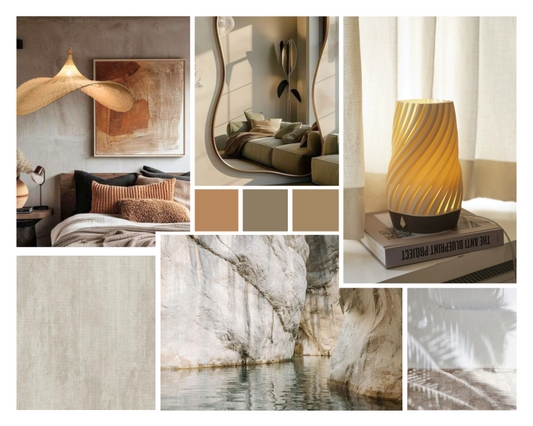
From there, the creative process began. Searching for inspiration, developing ideas, making sketches, exploring shapes and slowly working towards a real design. From an initial mood board to a concept, and eventually to a lamp that truly felt like their own.

Design is about exploring possibilities and making choices

For the interim presentations, the students created quick mock-ups to make their ideas tangible. What made the project even more exciting was that the Metis Montessori Lyceum purchased 3D printers during the design programme. This allowed the students to model and print their lamps themselves.

During the final presentations, we could therefore see many different making processes developing alongside one another: from 3D printing to laser cutting, from experimenting with shapes to researching materials.

The final presentations were such a joy to see. There were so many different ideas. Some lamps were already fully developed, while others were still presented as early prototypes. We saw designs using glass, abstract interpretations of seashells and even an idea involving real sand, which would be included with the lamp to bring the feeling of the beach into the home.

What we loved most was seeing how much joy the students found in the process. The joy of imagining and creating something themselves. The curiosity with which they explored their ideas. The courage to experiment, even when things did not immediately work out.

And perhaps the most valuable lesson of all: realising that design is not about having the perfect answer from the very beginning. It is about making choices, whether these are shaped by production techniques, available materials or other limitations, and using those choices to develop your idea step by step.